Structural demolition · Monroe County
Structural demolition in the Florida Keys
Structural demolition is the removal of load-bearing structure: concrete frames, elevated slabs, steel, and the piles and footings below. In the Keys that work happens close to water, on narrow lots, with salt-damaged concrete that does not behave like new.
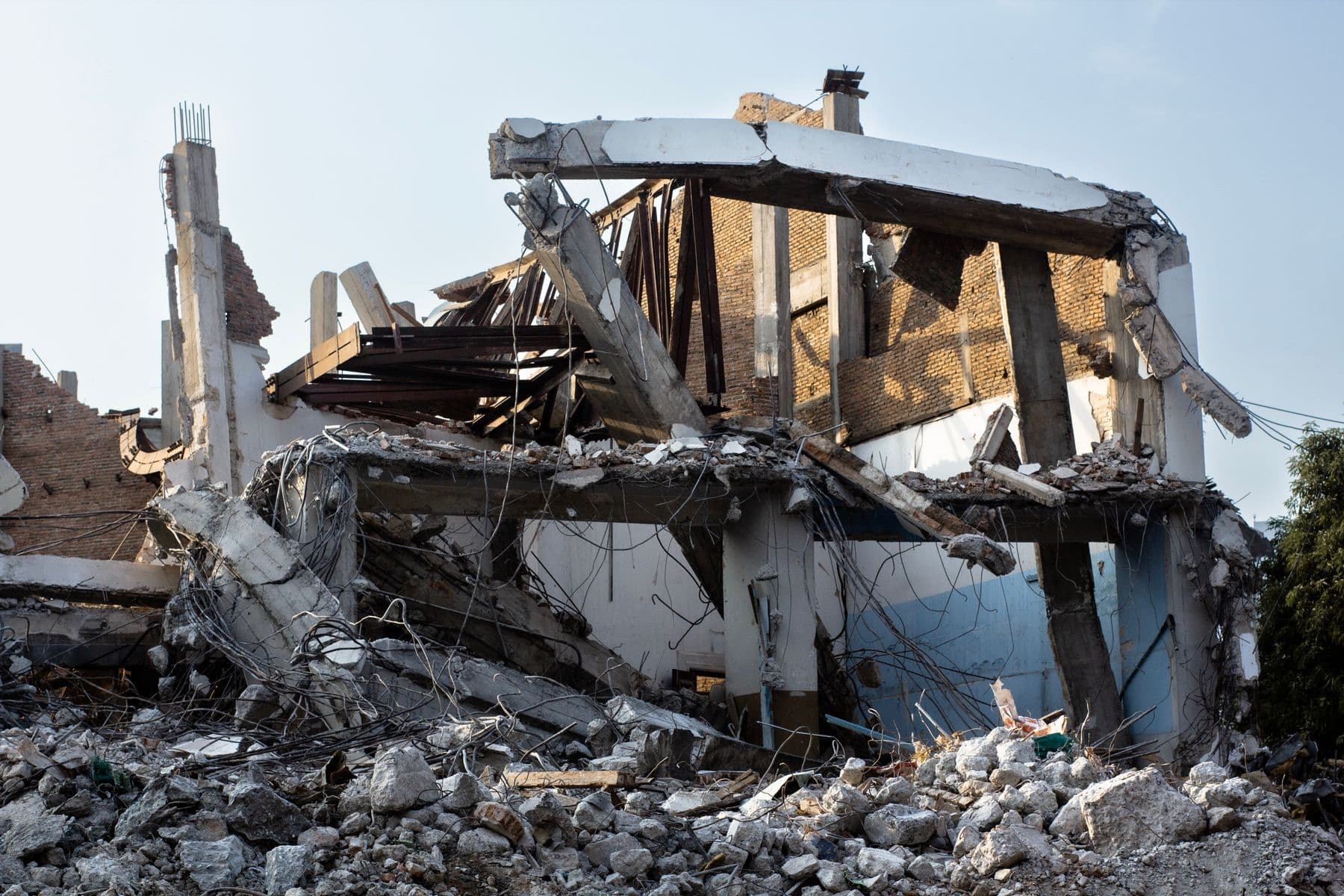
Concrete in the Keys carries a history. Chlorides from sea air and spray corrode the steel inside, the concrete cracks and spalls, and the member can fail in ways the drawings never predicted. We assess condition before we plan the sequence, and where a structure is unsafe, an engineer defines the order of removal.
Foundations are their own task. Pile-supported buildings, slabs poured on fill and old seawall returns all need different handling. Where removal opens the ground below the water table, Romco self-performs dewatering and Support of Excavation, the engineered system that holds a deep cut open.
Neighbors and the public matter here more than the machine does. Vibration, dust and falling debris need a plan, and a Keys lot rarely has a wide buffer. We set exclusion zones, dust control and working hours, and we agree them with the permit office.
Send what you have: drawings, an engineer's report, photos of the damage. We will walk the structure and write a scope that names the engineered steps separately from the removal.
Order of work
- Walk the structure and review drawings and any engineer's report.
- Order the asbestos survey and request utility disconnects.
- Have an engineer define shoring and the order of removal.
- File the permit and any approvals for work near water or the road.
- Set the perimeter, dust control and exclusion zones.
- Remove structure in the engineered sequence, sorting concrete and steel.
- Remove or cut foundations, backfill and pass final inspection.
Where Keys jobs stall
The usual trouble spots, and how each is handled
Salt-damaged concrete
Corroded reinforcing steel makes concrete less predictable. We assess condition first and let an engineer set the sequence.
Piles and deep foundations
Removing or cutting piles near water needs dewatering, shoring and sometimes marine approvals. Romco self-performs dewatering and Support of Excavation.
No buffer from the neighbors
Narrow lots leave little room for debris or dust. We set exclusion zones and controls and agree them with the permit office.
Unsafe or storm-damaged structures
A damaged structure may not carry its own weight. An engineer defines how it is stabilized before it is removed.
What falls outside our hands
Engineering design for shoring and removal sequence is done by a licensed engineer. Marine, environmental and road-authority approvals are separate filings that we coordinate but do not issue.
Questions
About structural demolition
Can you take down a damaged concrete building?
We quote it. The first step is a condition assessment, and an engineer defines how the structure is stabilized and removed. We name those engineered steps separately in the scope.
Do you handle foundations and piles?
Yes. Romco self-performs dewatering, Support of Excavation and deep foundations, including in tidal ground. The scope depends on what is below grade and how close the water is.
What does a demolition cost in the Keys?
A quote follows a visit to the property, or a review of photos and drawings when those show enough. The figure moves with the building's materials and height, the asbestos survey, the utility disconnects, how equipment reaches the lot, and the haul, because everything leaves the island chain by truck. We do not publish prices, since two lots that look alike seldom cost alike.
Is there a minimum or maximum size of job?
No. A shed, a pool, a slab or one interior wall gets a quote, and so does an entire building, whether the work is selective or structural. Describe what is standing and what has to stay, and we price that scope.
Is Romco Builders licensed?
Yes. Romco Builders is a licensed Florida general contractor, headquartered in Fort Lauderdale. Some trades need a license of their own: asbestos removal, electrical disconnects and tree work are examples. Those are done by firms that hold it, and we fit them into one schedule.
From first call to final
Six stages, always in this order
Send the address and the scope
Phone us or fill in the quote form. Say which key it is on, what must come down and what must stay.
A visit to the lot
Someone from Romco goes to the property. The building, the flood zone, the utility connections, the way equipment and trucks get in, and the neighboring lots all get a look.
The written quote
You get a document listing what comes out, what is kept safe, and what is trucked north off the island chain. Anything that hangs on survey results is marked as such.
Paperwork before machines
If asbestos testing applies, it happens here. So do the utility shutoffs and the filing of your demolition permit with whichever office covers the parcel.
Demolition and haul-off
The crew works through the agreed order. Debris is trucked to permitted facilities, and we keep the load records.
Final inspection
The permit office signs off after its last inspection. You are left with a cleared lot, or the shell you specified.
Structural demolition across Monroe, including Key West, Stock Island, Marathon, Islamorada, Key Largo, Ocean Reef, Tavernier, Duck Key, Key Colony Beach, Big Pine Key, and every other Monroe city.
More ways we can help
Other kinds of demolition we quote
- Interior demolitionCondo, hotel and shop interiors and stilt-house living floors cleared out, salt damage and all.Interior demolition in Monroe →
- Selective demolitionRemove one wing, a deck or a floor of a Keys building and protect what stays.Selective demolition in Monroe →
- Commercial demolitionShops, motels, marinas and multifamily buildings, planned around US 1 access.Commercial demolition in Monroe →
- House demolitionBlock ranches, wood cottages and stilt houses, taken down after the permit work is done.House demolition in Monroe →
- Concrete removalSlabs, driveways, decks and caps broken out, sorted and hauled off the island chain.Concrete removal in Monroe →
- Pool removalFill in or fully remove a pool, with the groundwater and the fill planned first.Pool removal in Monroe →
- Mobile home demolitionMobile homes, trailers and RVs removed from park lots and private lots, with utilities handled.Mobile home demolition in Monroe →
- Storm damage demolitionHurricane-damaged homes and buildings, made safe and removed, with the paperwork in order.Storm damage demolition in Monroe →
- Site clearingClear a lot of old structures, slabs and debris, where the habitat and tree rules allow it.Site clearing in Monroe →
- Asbestos coordinationSurvey, notice and licensed abatement lined up so the demolition can proceed.Asbestos coordination in Monroe →
- Accessory structure demolitionSheds, carports, garages, screen rooms and dock houses removed cleanly.Accessory structure demolition in Monroe →
- Something else?Do not see your job above? Phone us and describe it. We quote every type and size.Call (239) 510-4206 →
Any type, any size, anywhere in the Keys
Tell us where it is and what has to come down. We will price it.
Romco Builders is a licensed Florida general contractor, headquartered in Fort Lauderdale. From a single wall to a full building, you receive a written scope and a quote.